
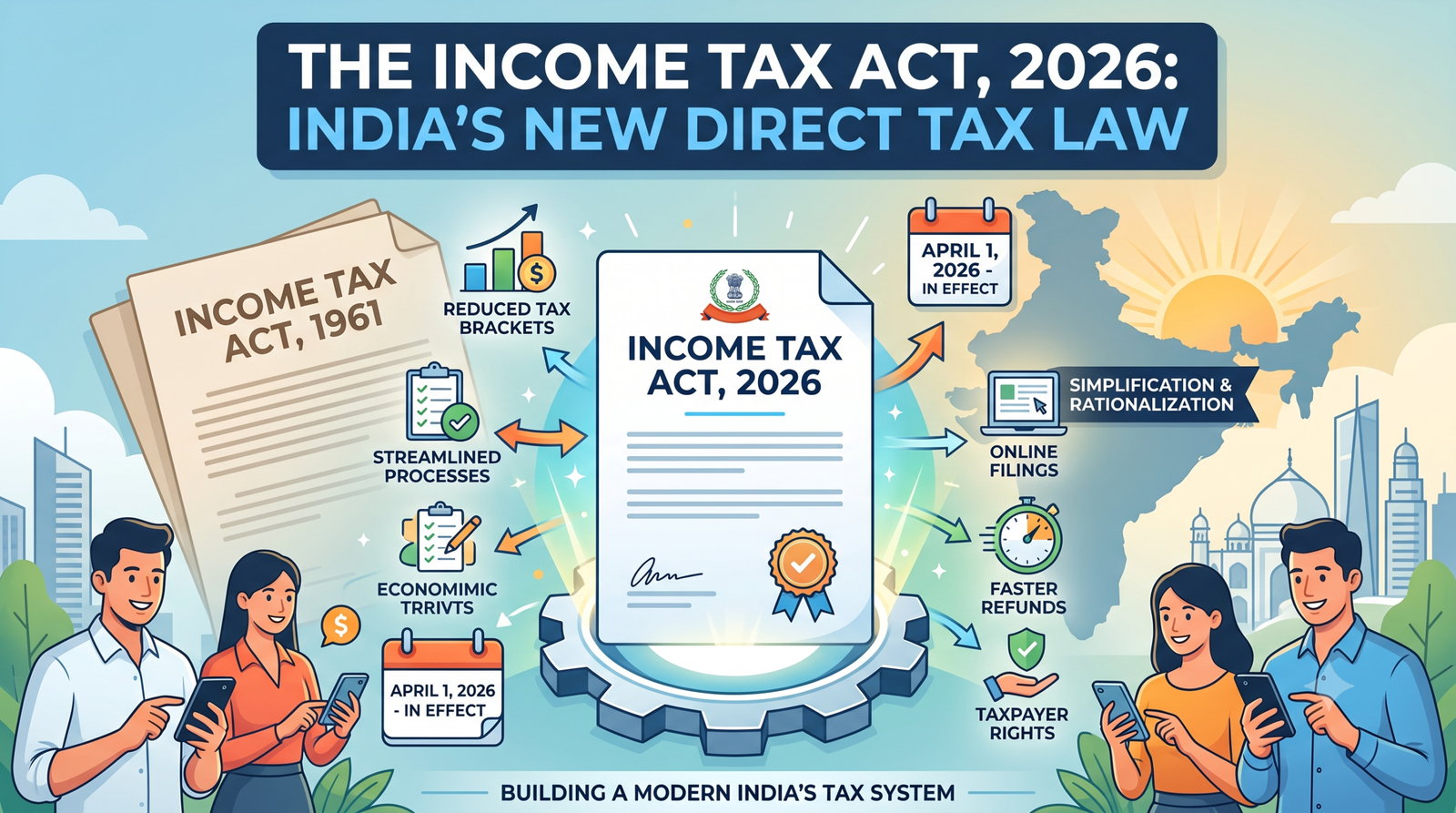
When the Income Tax Act, 2026 came into force on April 1, replacing the six-decade-old Income Tax Act of 1961, it was billed as a long-overdue simplification exercise — cleaner language, fewer redundant provisions, and a more taxpayer-friendly framework. Five months later, the law is facing its first real stress test, and the early verdict from Parliament is a mixed one.
The Committee Steps In
In early September 2026, the Parliamentary Standing Committee on Finance, chaired by Bhartruhari Mahtab, called in officials from the Ministry of Finance’s Department of Revenue and the Central Board of Direct Taxes (CBDT) for a closed-door review. The subject: “Direct Tax Reforms: Simplification, Rationalisation and Ease of Compliance” — essentially, a report card on whether the new Act is delivering on its own promises.
Mahtab’s framing was straightforward: the law is five months old, and it’s time to look at what’s actually happening on the ground, not just what was intended on paper.
The Good News First
There’s a genuine bright spot in the data. Net direct tax collections rose 23.09% year-on-year, touching ₹8.11 lakh crore as of August 10, 2026, up from ₹6.59 lakh crore in the same period last year. More people are filing returns too, which the committee reads as evidence that the compliance provisions are doing their job of widening the tax net.
That’s not nothing. A new tax code that manages to pull more filers into the system while growing collections is, on the surface, working roughly as designed.
Where the Cracks Are Showing
But the committee didn’t stop at the headline numbers, and what came up in discussion paints a more complicated picture:
Technical and compliance glitches. The panel flagged ongoing implementation issues significant enough to warrant a formal information request to CBDT — not just a passing comment.
A “punitive” tilt in enforcement. Several members pushed back on what they described as an aggressive notice regime, with taxpayers repeatedly having to re-establish that they’d already met their obligations. That’s the kind of friction a “simplification” law is specifically supposed to eliminate.
Too much discretion, too little oversight. Concerns were raised about the latitude given to tax officials — the worry being that a cleaner statute means little if implementation still leaves taxpayers exposed to unpredictable, official-dependent outcomes.
Rising litigation. The committee wants a full accounting of pending disputes and how cases are moving through appellate authorities and the courts — a signal that disputes may be piling up faster than they’re being resolved.
Technology as a double-edged sword. The panel’s position here is nuanced: greater reliance on digital systems is fine, even desirable, but only if it comes paired with real grievance redressal. Otherwise, automation just becomes a new source of friction instead of removing the old ones.
What Happens Next
CBDT has been given two to three weeks to respond with hard data — on revenue impact, taxpayer growth, and the state of litigation. That response will matter more than this meeting did, because it will show whether the concerns raised are teething problems that resolve with time, or structural issues baked into the new framework.
The Bigger Picture
This is a useful reminder of something easy to forget in tax policy: rewriting a law is the easy part. Simplification on paper doesn’t automatically translate into simplification in practice — that depends on how the rules are interpreted, how much discretion officials retain, and whether the systems built to enforce compliance are actually built to also resolve disputes, not just generate them.
For now, the Income Tax Act, 2026 gets a passing grade on the numbers and an incomplete on the experience. Whether that gap closes will depend on what CBDT brings back to the committee in the coming weeks — and on this space, worth watching.

Leave a Reply